Thyroid blood tests are among the lab tests NIH says biotin can interfere with, and Rosedil Capsules list 4,620 mcg of biotin per serving. Rosedil Capsules do not claim anything about the thyroid; the concern is only that a supplement can change how a test reads. This post explains the general warning, what to tell your clinician, and why we give no advice on stopping or timing doses.
Can Rosedil Capsules affect a thyroid test?
They can in principle, because of the biotin they contain and not because of any action on the thyroid. NIH says high biotin intakes can cause falsely high or low results in some lab assays, and it names thyroid tests among them.1
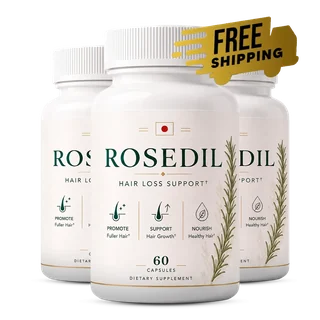
The label image shows 4,620 mcg of biotin per two-capsule serving, printed as 15,400% of the Daily Value. Whether a particular thyroid result would be shifted depends on the method your lab uses, which neither the label nor this page can see. A reading that is off for no obvious reason is the situation in which your clinician most needs to know about the supplement.
Why are thyroid tests mentioned at all?
They are mentioned because some thyroid tests are run with the kind of lab method that biotin can disturb. NIH groups them with troponin tests as examples of assays that use a biotin and streptavidin reaction.1
FDA's safety communication focuses on troponin and says biotin in supplements, including those marketed for hair, skin and nails, can cause incorrect results that may go undetected.2 We use the FDA page for the general warning only. It does not say that every thyroid test is affected or that any one test will be. If you want the broader picture, our biotin lab tests page covers the general point and has a note you can bring to an appointment.
What does a wrong result lead to?
An incorrect result can lead a clinician to read a normal situation as a problem or a problem as normal, and that is why the note matters. We cannot say what any one person's result would show, and we do not guess.
The practical outcome is that a repeat test, a different method or a change in how the sample is handled might be chosen by the people who run the test. Those choices belong to them. The table below separates what you can do from what is theirs to decide.
| Step | Who does it |
|---|---|
| Name the supplement and the biotin amount | You |
| Say when you last took a serving | You |
| Choose the test method and decide whether to repeat | The lab and your clinician |
| Decide about timing of any dose | Your clinician, if at all |
| Decide about any prescribed medicine | The prescriber only |
Should you stop Rosedil Capsules before a thyroid test?
We do not advise stopping, and we do not advise a schedule, because the sources we use give neither. No safe gap in days is stated by NIH or FDA in the pages we cite, and a number from us would be a guess.
What we can say is that the decision about whether to pause a supplement, and for how long, should come from the clinician who ordered the test or from the lab, since the method is theirs. If you take thyroid medicine, keep taking it as prescribed; never change a medicine because of a supplement or a test without the prescriber's say. NCCIH advises telling all of your providers what you take, and it notes that some medicine and supplement interactions can be serious.3
What should you bring to the appointment?
Bring the bottle or a clear photo of the Supplement Facts panel, plus a short written list. A good note takes two minutes to write.
- The product name: Rosedil Capsules, a dietary supplement.
- Biotin: 4,620 mcg per serving of two capsules, from the label image.
- The label directions: two capsules daily with an 8 oz. glass of water.
- The date of your last serving.
- Other supplements and every medicine you take, including thyroid medicine.
Our biotin page explains the Daily Value arithmetic, and NIH sets no upper level for biotin, so the issue here is about tests, not about an intake limit. The panel also lists zinc, niacin, vitamin B6 and a horsetail extract; mention the whole product, not only the biotin line, so the clinician can judge for themselves.
Who can answer your questions?
Your clinician, the lab that runs the test and your pharmacist can each answer part of it. The clinician knows why the test was ordered, the lab knows its method, and the pharmacist can read the panel against your medicines.
If you want to confirm what is in the bottle, the owner's pack gives +1 (302) 200-3480 and [email protected] for orders and questions; the order desk can read you the label but cannot tell you how a given lab reads a test. Our who it's for page lists the groups who should ask before using the capsules, and the safety page lists the other questions to raise.
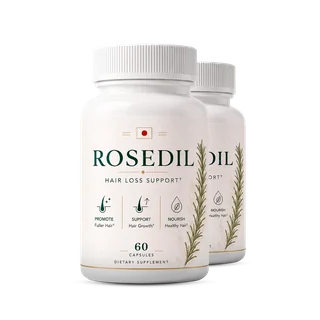
The owner's pack describes a 60-day money-back guarantee (sales page; confirm the live policy) and does not say when the 60 days start. The owner's list shows 2 bottles at $79 each; confirm at the live checkout. If you still want to look, you can open the order page.
Questions people ask
Do Rosedil Capsules affect thyroid test results?
They can in principle, because NIH says biotin can cause falsely high or low results in some lab tests, including thyroid tests. Tell your clinician that you take Rosedil Capsules.
Do Rosedil Capsules claim anything about the thyroid?
No such claim is made, and none of our sources links Rosedil Capsules to the thyroid. The concern is only about how a lab reads a sample.
When should I tell my doctor about Rosedil Capsules before thyroid bloodwork?
Tell them when the test is ordered, ahead of the draw. Give the name, the 4,620 mcg of biotin per serving and when you last took Rosedil Capsules.
Can I keep taking Rosedil Capsules if I use thyroid medicine?
We cannot answer that for you. Ask your prescriber or pharmacist about Rosedil Capsules and keep taking your medicine as prescribed.
Sources for this page
- NIH Office of Dietary Supplements: Biotin, Fact Sheet for Health Professionals. ods.od.nih.gov
- FDA: Biotin Interference with Troponin Lab Tests and the FDA safety communication. www.fda.gov
- NCCIH: Some Medication-Supplement Interactions Can Be Serious. www.nccih.nih.gov
These statements have not been evaluated by the Food and Drug Administration. This product is not intended to diagnose, treat, cure, or prevent any disease. Safety: Rosedil Capsules are a dietary supplement, not a medicine. One serving (two capsules) lists 4,620 mcg of biotin, which can distort some lab tests (FDA), and 30 mg of niacin, close to NIH's 35 mg upper level for supplements. Ask your doctor or pharmacist before using them, especially if you are pregnant or nursing, under 18, have a medical condition or take medicine, and tell any lab you take biotin. Take no more than the label says, keep the bottle away from children, and report problems to FDA MedWatch. Rosedil is an independently run information site about Rosedil Capsules; the owner states it is the Official U.S. Rosedil shop, and we have not verified that. It is not the maker. We may earn money when you order through links marked as sponsored. The seller sets prices, shipping and refund terms; the prices here are the owner's list, so confirm at the live checkout.